
Register
Australian and New Zealand
HUPMOBILE


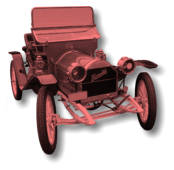

Hupmobiles in Australia and New Zealand
Model 20
1909 - 13
15,780 approx.
Model 32
1912 - 15
25,739
Model K
1914 - 15
6,979
Model N
1915 - 17
27,514
Model R
1917 - 25
178,763
Model E
1925 - 28
32,459
Model A
1926 - 31
164,640
Model M
1928 - 29
22,125
Model S
1930 - 31
26,323
Model C
1930 - 32
9,930
Model H
1930 - 32
3,468
Model L
1931 - 32
8,036
Model U
1930 - 32
690
Model B
1932 - 33
4,991
Model F
1932 - 34
4,962
Model I
1932 - 34
1,453
Model K
1933 - 34
5,962
Model W
1934 - 35
4,985
Model J
1934 - 35
2,488
Model T
1934 - 35
1,501
Model D
1935 - 36
6,274
Model O
1935 - 36
324
Model N
1936 - 37
262
Model G
1936 - 37
1,749
Model E
1938 - 39
Model H
1938 - 39
Model R (Skylark)
1939 - 41
354
TOTAL
561,464
The Hupmobile was first advertised for sale in Sydney, Australia in
February 1910, barely twelve months after its first production in February
1909 when it was first shown at the Detroit Automobile Show.
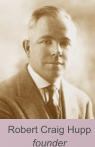
Robert Craig Hupp (President), his brother Louis Gorham Hupp
(Secretary/treasurer), and Charles D Hastings (Vice
President) founded the company and produced the
prototype which produced the early orders. R.C. Hupp
had started with Olds Motor Works in 1902, Ford in
1906-7, and the Regal Motor Car Company in 1907-8
before starting Hupmobile in November 1908. After its
introduction the following February, 500 were
produced, with 5,340 vehicles in 1910.
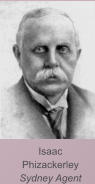
By June 1910 the Australian agent was Phizackerley's
in Elizabeth Street and Mr. E.G. Eagar, representing
the Hupp Motor Company of Detroit, Michigan, who
placed the agency with Mr Phizackerley, showed off the
20 HP model to the Sydney press in July 1910.
R.C. Hupp himself left the Company in November
1911, and was involved in Hupp-Yeats 1911-1919,
R.C.H. 1912-1915, Monarch 1913-1916, and Emerson
in 1917, none of which lasted very long.
Agencies throughout Australia and New Zealand took up
Hupmobile sales from 1910 and it was well received and
strongly supported.
Meanwhile under Hastings and others, Hupmobile continued
manufacturing robust and reliable motor vehicles until differences with
executives and the depression took its toll, and while it suffered financially
and made its last cars in 1941, the Hupp Company made parts during
WWII and in 1946 as the Hupp Corporation, and later as a subsidiary of
Gibson and Easy and later with White Industries making home
appliances. The name Hupp was dropped in the late 1990s.
The Australian and New Zealand Hupmobile Register explores the
Hupmobile story and it’s agents particularly in both these countries with
articles, registration records, photographs and more.
Some of the production figures at left are estimates based on Serial
Number ranges and it is not clear all were made in those ranges.
] 3,723